On the Frequency of Feeling: The Energetic Burden of Creation
/A commentary on the unseen labor of artists and the metaphysical cost of creation.
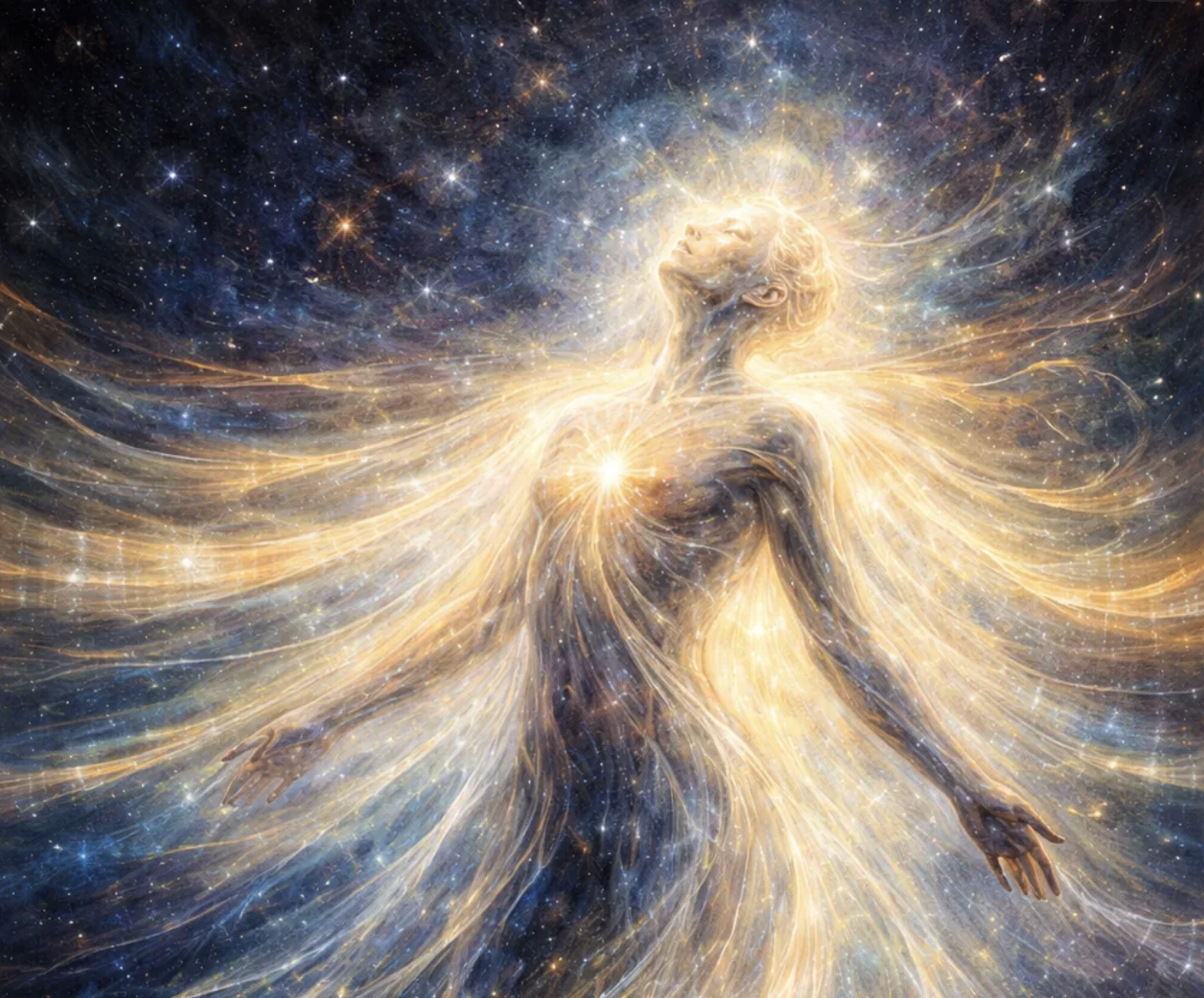
“Helping others through what hurts you is one of the unspoken burdens of creative work.”
In every discipline, from law and science to medicine, the concept of labor is tangible and measurable. However, artists shoulder a different kind of work: energetic labor, one that is less physical or procedural and more emotional and vibrational in nature. While the surgeon wields precision and the lawyer logic, the artist channels frequency, emotion, and empathy—currents that are less visible but equally consuming. Creativity requires not just skill or intellect, but unguarded access to emotion, memory, and imagination. Artists do not merely express; they absorb and translate experience into form, a process that demands they feel what others avoid.
At the core of many metaphysical teachings, including those of Neville Goddard, a mid-century mystic and lecturer known for his writings on imagination and the laws of consciousness, is the idea that consciousness shapes reality. Goddard’s Law of Assumption holds that what we assume to be true, with feeling and persistence, becomes the foundation of our experience. He argued that imagination is not a byproduct of thought but the source of reality itself, that assuming the feeling of a fulfilled desire is tantamount to manifesting that reality internally and, eventually, externally.
Artists, whether they intend to or not, operate within this energetic dynamic every day. When a painter loses herself in the texture of grief, when a musician channels heartbreak into a crescendo, when a writer captures collective joy or political unrest through story, these creators are engaging in an act of internal assumption. They willingly place themselves in the emotional state they wish to express, allowing that energy to echo through their work. This is not mere metaphor; it is the very real internal cost of creation.
In that sense, every act of creation is also an act of surrender. Artists imagine, embody, and then, ideally, release the energy once it has taken form.
Consider the realm of performance. Method acting, a term rooted in Konstantin Stanislavski’s early twentieth-century acting system, encourages performers to inhabit the emotional and psychological world of their characters rather than simply imitate them. While Stanislavski emphasized intention, motivation, and truth of experience, later interpretations, particularly those developed by Lee Strasberg and the Actors Studio in New York, pushed the technique toward deep emotional recall and complete psychological embodiment.
Actors such as Joaquin Phoenix in Joker and Jim Carrey in Man on the Moon have become emblematic of this intensity, often engaging in rigorous physical and emotional preparation to evoke authentic despair, instability, or obsession on screen. Critics have noted that such immersion can blur the line between performance and lived experience, leaving lingering emotional residue long after filming ends.
In modern culture, the concept of Method acting often becomes shorthand for emotional immersion, sometimes blurring into celebrity mythmaking. Public fascination with actors who “live” their roles has extended beyond classical practitioners like Phoenix or Daniel Day-Lewis to current figures in popular media. During the filming of Wicked, for instance, fans speculated that Ariana Grande had immersed herself so deeply in the role of Glinda that it began to influence her off-screen presence, noting visible changes in her appearance, tone, and demeanor. Whether these observations reflect conscious technique or energetic entanglement, they speak to a larger truth about the artistic process: when creative work demands total embodiment, the line between portrayal and possession grows thin. In such states of immersion, emotion ceases to be performed and begins to be inhabited, a powerful but precarious exchange that can blur identity and disrupt equilibrium long after the performance ends.
This phenomenon is not limited to actors. Painters, sculptors, and musicians often describe entering a trance-like state when they create, merging with the emotion or vision that drives their work. Michelangelo reportedly spent years painting the ceiling of the Sistine Chapel in near isolation, physically contorted and spiritually absorbed in his depiction of creation itself. Shakespeare, in his tragedies, revealed an uncanny ability to inhabit the full range of human emotion, from jealousy to despair, as though channeling the collective psyche of his time. In visual and literary arts alike, the process can become meditative but consuming; an artist working with themes of grief, divinity, or social unrest must hold that frequency for hours, even days. The creative act becomes both a conduit and a crucible, a space where the artist’s own energy fuses with the energy of the subject until distinction blurs.
This is a profound paradox: helping others through what hurts you is one of the unspoken burdens of creative work. Artists metabolize pain, but if they do not release it, they risk carrying it as residue. Sensitivity does not end with our own creations. Artists absorb the energy of other artists too, through music, film, and story.
Sometimes a song or performance can reopen an old emotional channel, reminding you of the frequencies you once carried. I felt this listening to Faozia’s “Unethical,” recently, a song so raw it pulled me back into a familiar sorrow. It reminded me how porous creative empathy can be, how easily we attune to another artist’s wavelength when we have once lived it ourselves. Yet part of artistry is also learning discernment, the ability to feel deeply without surrendering entirely to what we feel. It is healthy to be moved, to let another creator’s work stir emotion, but we must also know when to step back, to ground, to remember that their energy is not ours to hold.
This is the pitfall rarely discussed in the metaphysical community: energy, when unbalanced or intensely positively or negatively charged, can consume the vessel. It is not only dark energy that depletes; even the act of sustaining immense inspiration or emotional voltage can fracture equilibrium. Artists cannot avoid this entirely because their role is not simply to create beauty but to mirror truth. As Nina Simone once said, “An artist’s duty is to reflect the times.” To do so often means confronting the chaos and emotion of those times head-on, transmuting collective pain into understanding.
Protecting energy, then, becomes not a luxury but a necessity. For some, this looks like ritual grounding through prayer, meditation, or solitude after performances. For others, it is energetic hygiene: therapy, movement, sunlight, or detachment from the work once it is complete. Even small, conscious acts, such as stepping outside after writing, washing your hands after painting, or speaking gratitude after a performance, signal to the body and spirit that the energy has been released. The work has left you; it no longer owns you.
True artistry requires not just immersion, but the discipline to let go. The energy that fuels creation must eventually be returned to balance.
From a metaphysical perspective, this reflects Goddard’s principle itself: to imagine, feel, and then let go. The letting go is essential. Without release, the imagination becomes a loop rather than a creation.
To those who practice in emotional and imaginative domains, understanding this energetic burden is not about romanticizing suffering but acknowledging the cost of depth. Just as emotional labor is recognized as real and demanding in care or leadership, so too must the energetic labor of artistry be honored. What artists absorb, they must then transform, and what they transform, they must then release.
Perhaps that is the balance every artist strives to hold: to be both conduit and mirror, open enough to receive what moves through them, but steady enough to let it pass without corrosion. Emotion becomes motion, and energy becomes form, but it must be held with care. In honoring that exchange, art becomes not only expression and commentary but a quiet act of restoration. It is where energy transforms and finds new life in what it touches. Take care of your artists and creatives; have a little more reverence for what they carry. Artists, be gentle with your process. Feel deeply, create bravely, and do not let the art consume you for too long.